
Brown Spots in Your Lawn but the Sprinklers Are Running? Here's Why (Katy, TX)
If the system runs but the grass still browns out, it's almost always a coverage or pressure problem — not how long you water. Here's how to find the real cause.
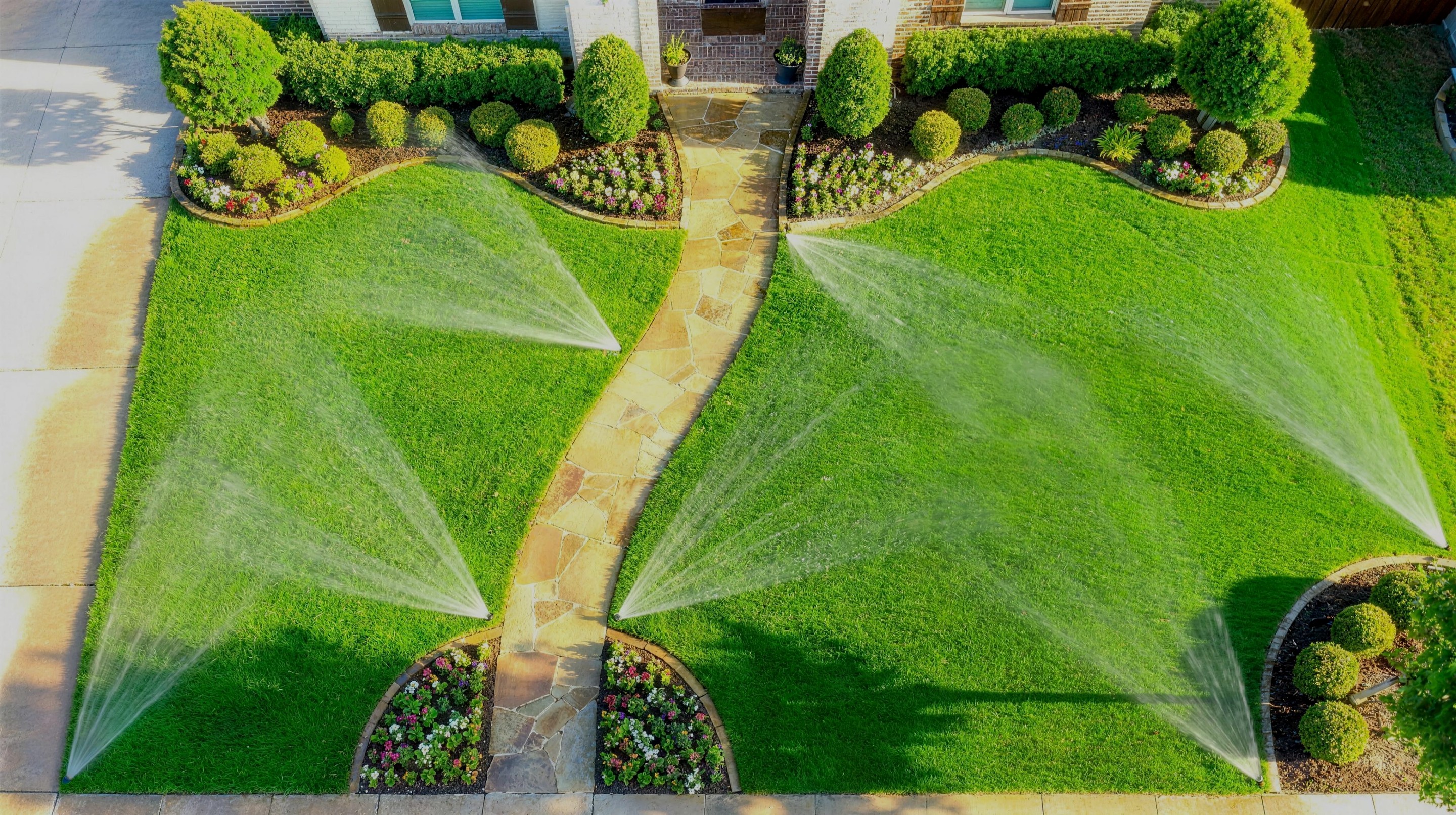
It's one of the most frustrating things a homeowner can look at: the sprinklers kick on like clockwork every morning, the water bill says you're watering plenty, and yet there's a crispy brown patch spreading across the front yard. If the system runs but the grass still dies, the problem almost never is how long you water. It's that the water isn't landing where it needs to — or there isn't enough pressure to throw it there.
Here's how we think through it around Katy and West Houston, from the quick stuff to rule out first to the coverage problems that are usually the real culprit.
First, rule out what isn't the sprinklers
Before you blame the irrigation, spend two minutes ruling out the lookalikes — because chasing a watering fix for a fungus problem just wastes water:
- Mowing too short. Scalped St. Augustine browns fast in a Katy summer. If the brown shows up right after mowing, raise the deck.
- Fungus or grubs. Brown that spreads in irregular rings or lifts up like loose carpet is usually disease or grubs, not a dry spot.
- Pet spots or spilled chemicals. Small, sharply-defined dead circles are almost always the dog, not the zone.
If it's none of those and the patch lines up with where the water doesn't reach, now you're looking at a real irrigation problem.
The #1 cause: coverage gaps
Sprinkler heads are designed for head-to-head coverage — each head should throw all the way to the next one, so the spray overlaps and there are no dry rings in between. When a system is installed a little short, or a bed gets added, or a head gets buried, you end up with donut-shaped dry spots exactly halfway between heads. The lawn right at each head looks great; the middle browns out.
The tell: the brown patch sits between heads, not at one. That's a spacing or throw-distance issue, and it's fixed by adjusting the heads, swapping to a longer-throw nozzle, or occasionally adding a head to close the gap.
Clogged, sunken, or misaimed heads
A single head that's clogged with grit, sunk below the grass, tilted, or aimed at the fence instead of the lawn will starve whatever it was supposed to cover. These are the cheapest fixes we do — a new nozzle is $9, and a pop-up spray head that's been run over by the mower is $25–$40. Often a head just needs raising or re-aiming, which is quick flat-rate work. Our guide on adjusting sprinkler heads walks through the DIY version.
Low pressure or too many heads on one zone
If every head on a zone is throwing short — weak, floppy spray that barely clears the head — that's a pressure problem, not an aim problem. It can be a partially-closed valve, a line leak bleeding off pressure, or simply too many heads crammed onto one zone. A zone that's overloaded can't push all its heads to full radius, so everything mid-lawn goes dry. If a whole zone looks weak, see why one zone underperforms — and a hidden leak is worth catching early since it also runs up your water bill.
Mixed head types on one zone
Here's a sneaky one: if a single zone has both spray heads and rotor heads, it can't water evenly no matter how long it runs. Sprays put down water two to three times faster than rotors, so by the time the rotor sections get enough, the spray sections are drowning — and you get brown and soggy on the same zone. The fix is putting matched heads (or matched-precipitation nozzles) on each zone.
Sprinkler acting up in Katy?
We diagnose same-day and repair on the spot at flat, posted rates, and you approve the price before we start.
Are you watering deep enough?
The last piece is habit. Short, daily watering trains grass to grow shallow roots that fry the first hot week. Fewer, longer, early-morning soaks build deep roots that ride out a Katy summer. We break down the actual schedule in how often to water your lawn in Katy — but if the coverage is off, no schedule will save the dry spots.
How we track it down
Coverage problems are hard to eyeball because you're rarely standing in the yard while it runs at 5 a.m. When we come out, we run each zone in daylight, watch where the water actually falls, and find the gap — a short-throwing head, a pressure drop, a mismatched nozzle. A same-day service visit is $125, or a scheduled full system evaluation is $75, where we check every zone, dial in the coverage, and program your timer for the season. Either way you approve any repair price before we start — our rates are published, so there are no surprises.