
One Sprinkler Zone Not Working? How to Track Down the Problem
When every zone works but one, you've already ruled out most of the system. Here's the order we work through it to find the dead zone fast.
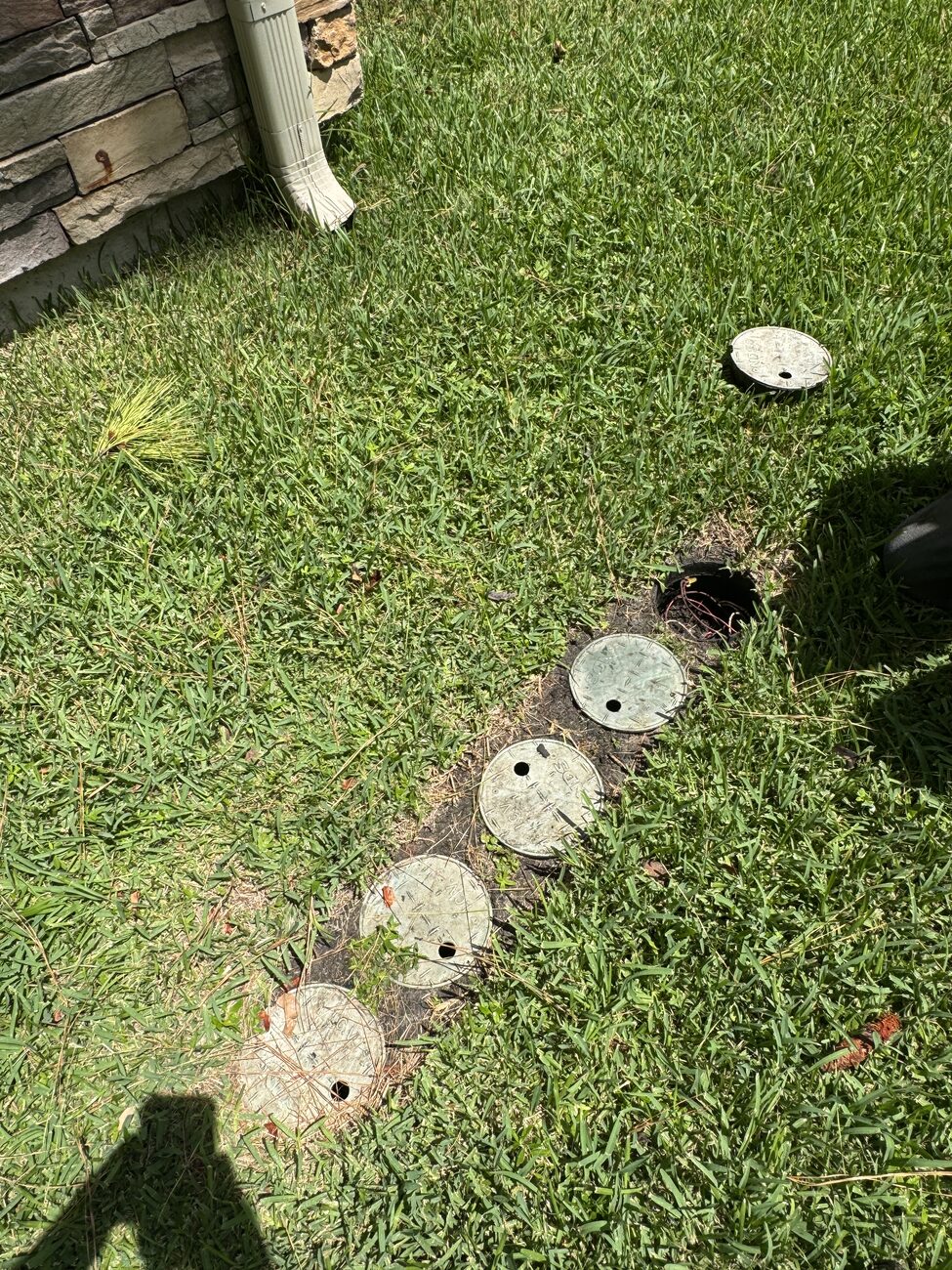
Every zone in the yard runs fine except one. It's one of the most common calls we take around Katy — and it's also one of the most diagnosable, because a single dead zone rules out most of the system before you even start.
Here's the logic: your controller, main line, and water supply are shared by every zone. If the other zones water normally, all of that shared equipment is fine. What's left is the short list of parts unique to the zone that's down — its valve, its control wire, and the terminal on the controller that drives it. Three suspects. We work them in this order.
Start at the controller
Before you set foot in the yard, rule out the simplest explanation: the controller isn't actually calling for that zone. Put it in manual mode and start the dead zone directly. Watch the display and listen. A couple of things to check while you're there:
- Is the zone even programmed? A cleared schedule or a setting someone changed can skip a zone entirely — that's a free fix.
- Does the controller show a fault? Many models detect a short on a zone and flag it or skip that station. If yours reports a shorted station, that points hard at the wire or the solenoid, not the valve body.
If the controller is old, glitchy, or losing its settings, that's its own issue — see controllers & smart Wi-Fi.
Sprinkler acting up in Katy?
We diagnose same-day and repair on the spot at flat, posted rates, and you approve the price before we start.
Test the valve by hand
Now go to the valve box for that zone. Most residential valves let you open them without any electricity — either a bleed screw you loosen a turn, or the solenoid (the black cylinder on top) twisted a quarter turn counter-clockwise.
If the zone comes to life and the heads pop up, that's the most useful result you can get: the valve, the diaphragm, and all the plumbing are fine, and your problem is electrical. If the zone stays dead even with the valve open by hand, the problem is mechanical — a seized valve, a diaphragm packed with grit, or a broken lateral line. That's valve and line repair territory.
Chase the electrical path
If the valve opened by hand, three things can still break the electrical signal:
- The solenoid — the coil that converts the controller's signal into valve movement. They burn out, and lightning (which we get plenty of on the Gulf Coast) takes them out too. About $125 to replace.
- The wire — each valve has a control wire back to the controller. Breaks happen where someone dug, where a fence post went in, and most often at an old splice. A splice buried without a waterproof connector corrodes in our wet clay and can fail years later.
- The connections — corroded wire nuts right at the valve are extremely common. Pull them apart; green, crusty copper is your culprit.
Tracing a break in buried wire is where most homeowners stop and call — finding it takes a locator or a systematic resistance test, and guessing where to dig is an expensive way to look.
The quick cheat-sheet
- Valve opens by hand, zone runs → electrical: solenoid, wire, or connection.
- Valve won't open by hand either → mechanical: seized valve, packed diaphragm, or broken line.
- Controller shows a short or skips the station → almost certainly a shorted solenoid or damaged wire.
- Nothing runs on any zone → shared equipment: water supply, main line, or controller power — not a single-zone problem at all.
When it's worth a call
Opening a bleed screw and checking wire nuts is fair homeowner territory. Digging for a buried wire break or metering a solenoid usually isn't — not because it's hard, but because without a locator you're excavating on a hunch. We diagnose dead zones across Katy and West Houston at flat rates, same-day, and you'll know what's wrong and what it costs before anything gets dug up.