
Is Drip Irrigation Worth It for Your Katy Flower Beds?
Spray heads are built for lawns, not beds. For flower beds and foundation plants, drip usually saves water and grows healthier plants. Here's the honest case.
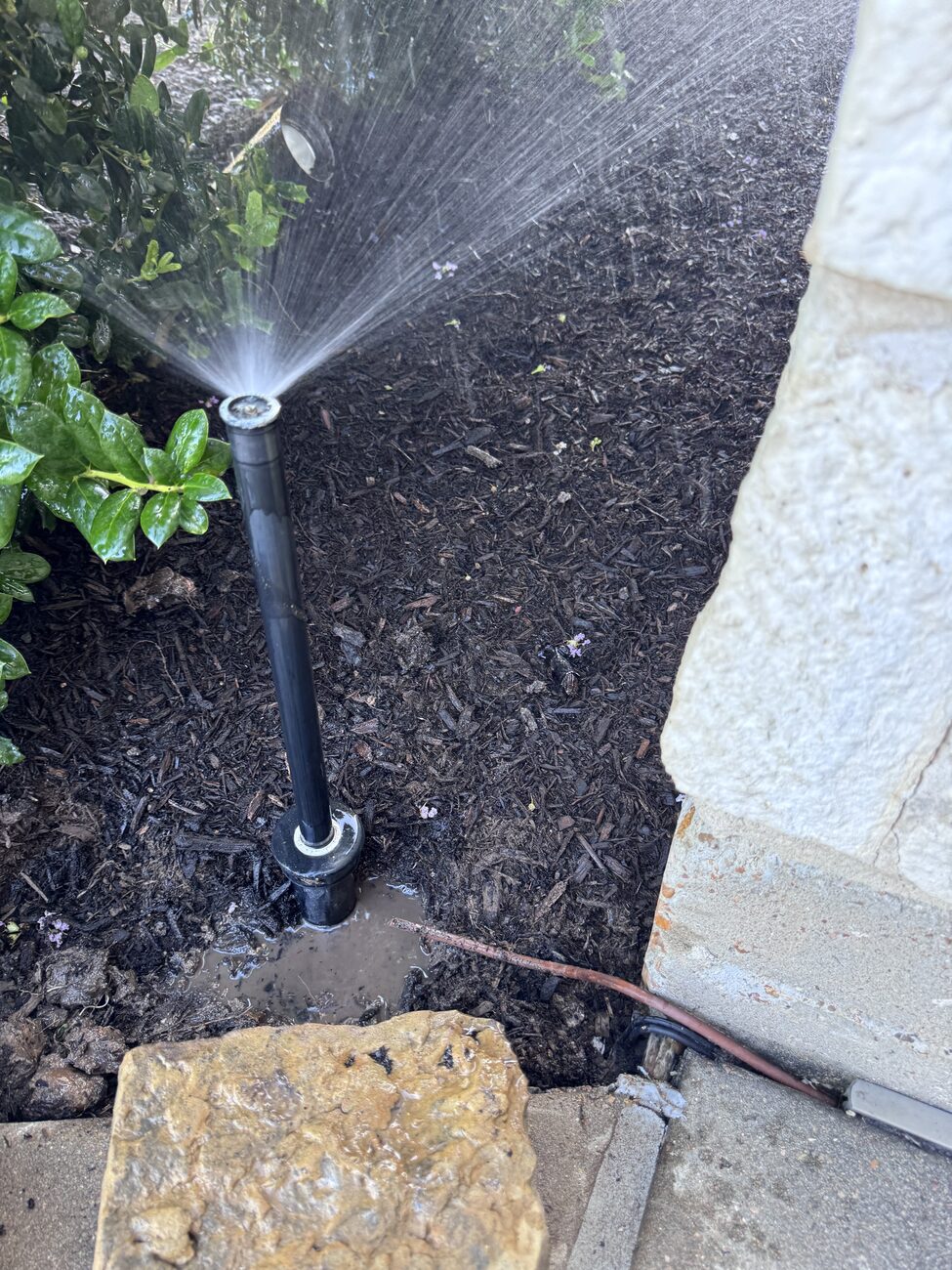
Most sprinkler systems around Katy water the flower beds the same way they water the lawn — with pop-up spray heads. It works, sort of, but it's the wrong tool for the job. Beds and spray heads are a mismatch, and it shows up as leggy plants, water spots on the windows, and a chunk of your water bill going straight to evaporation. For planted areas, drip irrigation is usually the better answer — and often worth converting to. Here's the straight version.
Why beds and spray heads don't mix
- Wet foliage breeds disease. Spraying water over the tops of plants leaves leaves and blooms wet, which invites fungus and leaf spot — especially in our humid climate.
- Overspray is wasted water. A spray head in a bed throws water onto the house, the fence, the windows, and the sidewalk. That's water you're paying for that never reaches a root.
- Plants block the spray. As shrubs fill in, they shadow the head, so the back of the bed goes dry while the front gets soaked.
- Mulch washout. A hard spray in a bed carves channels and floats your mulch into the lawn.
What drip irrigation actually is
Drip is low-volume tubing with small emitters that release water slowly, right at the base of each plant. Instead of throwing water through the air, it drips it into the soil at the roots — where the plant can actually use it. It runs off the same valve and controller you already have; a spray zone gets converted to a drip zone.
The benefits for a Katy yard
- Real water savings. No overspray, almost no evaporation. Nearly all of it reaches the roots, so beds use noticeably less water than they did on spray.
- Healthier plants. Dry foliage means far less fungus, and steady root-zone moisture beats the feast-or-famine of a spray cycle.
- Fewer weeds. You water the plants you want, not the whole bed, so weeds between them get less.
- It suits our clay. Slow, steady drip soaks into heavy Katy clay instead of running off the way a hard spray does — the same reason cycle-and-soak works on lawns.
- Great for foundation plantings. Steady moisture in the beds against the house is easy with drip, which matters here where clay soils swing between soaked and bone-dry.
Sprinkler acting up in Katy?
We diagnose same-day and repair on the spot at flat, posted rates, and you approve the price before we start.
So — is it worth it?
For flower beds, vegetable and herb gardens, shrub rows, and foundation plantings, almost always yes. The water it saves and the healthier plants usually make it pay off, and it's low-maintenance once it's in. Where drip is not the answer is the open lawn — turf still wants spray heads or rotors for even coverage. A well-set-up system uses the right tool in each spot: heads on the grass, drip in the beds.
How a conversion works
Converting a bed from spray to drip is a clean job: we cap or swap the spray heads on that zone, run drip tubing through the bed with an emitter at each plant, and add the small pressure regulator and filter drip needs to run right. Because every yard's beds are different, we look at it and give you a written price to approve before any work starts — same flat-rate, no-surprise approach as the rest of our published pricing. If you're planning a new system or an expansion, we'll design the beds as drip from the start.
Drip also pairs perfectly with a smart Wi-Fi controller — set the bed zone to run longer and less often, and the whole thing basically takes care of itself. Want to see if your beds are a good fit? Grab a $75 evaluation or book online and we'll take a look.